

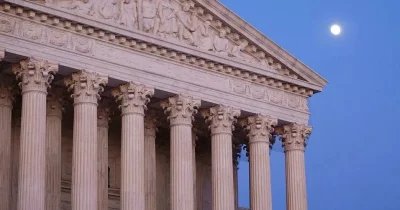
The US Supreme Court correct handed federal regulators a pair of wins that crypto firms could also simply quiet pay very end attention to. In two separate rulings issued on June 4, the Court upheld the enforcement authority of both the FCC and the SEC, rejecting constitutional challenges that will own kneecapped the companies’ capability to police markets and penalize atrocious actors.
Two circumstances, one message: the companies can place apart in power
In FCC v. AT&T, Inc., the Court ruled 8-1 that the FCC’s direction of for imposing civil penalties does no longer violate the Seventh Amendment factual to a jury trial. AT&T and Verizon had argued otherwise, and they lost decisively.
The handy result: the FCC can receive penalties exceeding $57 million from AT&T and nearly $47 million from Verizon for violations connected to customer data privateness. The broader enforcement actions in that batch totaled nearly $200 million.
The 2nd case, Sripetch v. SEC, modified into even extra lopsided. The Court ruled 9-0 that the SEC can discover about disgorgement of earnings purchased through unlawful activities and not utilizing a must prove that specific investors suffered deliver financial damage.
The Sripetch case concerned a disgorgement exceeding $2 million connected to penny-stock fraud that impacted as a minimal 20 firms.
Why the crypto market could also simply quiet care
The Sripetch ruling is particularly connected. The Court clarified that the SEC’s power to search out out about forfeiture is in step with earn earnings in problem of particular person investor losses. This kind the SEC can calculate what a false operation earned and claw that serve without desiring to note damage to particular person wallets or brokerage accounts.
These decisions furthermore arrive as a counterbalance to the 2024 ruling in SEC v. Jarkesy, which restricted the SEC’s authority to employ in-rental administrative hearings for particular adjudications. The original decisions don’t reverse Jarkesy, but they account for that while procedural boundaries exist, the SEC’s substantive enforcement capabilities dwell sturdy.
The broader pattern is value noting. The Supreme Court spent 2024 trimming agency powers in circumstances relish Jarkesy and the landmark Loper Shiny decision that overturned Chevron deference. Now, in 2026, it’s reinforcing these identical companies’ core enforcement functions with end to-unanimous votes. The Court looks to be drawing a line: companies can’t impact bigger their gain jurisdiction unchecked, but they completely can place apart in power the authority Congress already gave them.
Disclosure: This text modified into edited by Editorial Workers. For extra data on how we make and evaluation snarl material, look our Editorial Coverage.
