

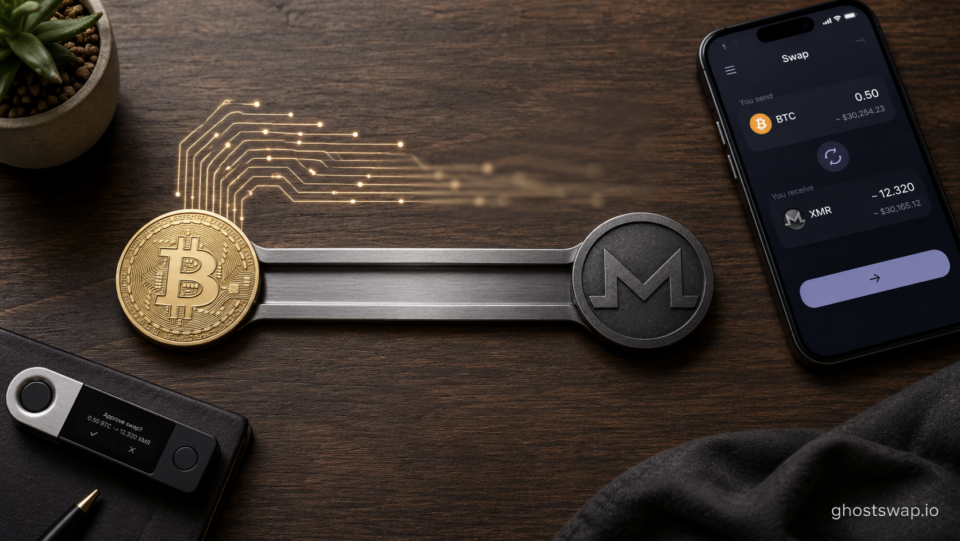
Swapping Bitcoin for Monero is relatively straightforward, but the transaction changes the visibility of a user’s financial activity. Bitcoin records transactions on a public ledger, while Monero is designed to conceal transaction participants, recipient addresses and amounts by default.
That difference is central to the exchange. A Bitcoin address can expose an address’s transaction history, including incoming and outgoing funds. Monero uses ring signatures, stealth addresses and confidential transactions to make it difficult for outside observers to determine who spent funds, who received them and how much was transferred. Monero’s documentation describes this protection as plausible deniability rather than an absolute guarantee of anonymity.
Custodial and non-custodial options
Users generally choose between a custodial service and a non-custodial swap. With a custodial platform, the service takes control of the Bitcoin, credits an internal account and processes the conversion on its own books. The user typically needs an account and identity verification, and the funds remain under the platform’s control until Monero is withdrawn. Some custodial venues no longer support Monero.
A non-custodial service does not maintain a user balance. Instead, it generates a one-time Bitcoin deposit address, routes the transaction through its available liquidity and sends the Monero to an address supplied by the user. The process normally does not require an account or a separate withdrawal step, although the service and its liquidity providers may still apply compliance checks.
Typical swap process
A non-custodial Bitcoin-to-Monero conversion generally requires the trading pair, a destination Monero address and a refund Bitcoin address. Users may also be offered a floating or fixed exchange rate. A floating rate is determined when the deposit arrives, while a fixed rate locks the quoted price for an additional fee or spread.
After the user sends Bitcoin to the deposit address, the swap is completed once the required network confirmation is received. The process can take around eight minutes after confirmation under normal conditions, although timing depends on the service and both networks. The same basic procedure applies when converting Monero back into Bitcoin.
Fees and practical precautions
The final cost consists of more than the service’s quoted fee. Providers charge a swap fee or margin, while the Bitcoin and Monero networks impose their own transaction costs. Network fees can become significant during periods of congestion and may exceed the provider’s charge on smaller transactions. A fixed-rate option usually carries a less favorable rate in exchange for protection against price movements while the transaction confirms.
Address accuracy is critical because blockchain transfers are generally irreversible. Users should copy and paste the destination address, verify its beginning and ending characters, and provide a valid refund address before sending funds. That refund address can allow an automatic return if the swap cannot be completed.
Non-custodial does not mean exempt from compliance procedures. Services may use licensed liquidity providers that screen deposits, and a transaction flagged as potentially linked to illicit activity can be held for review. The final decision in such cases rests with the provider’s compliance process rather than the user.
